Calculating the absolute perfect fuel load for a race is often dismissed as a complicated science. At SimUltimate, we regularly see drivers relying on external apps, Discord bots or obscure spreadsheets. But what happens if you don’t have these tools to hand in the heat of the moment, or if you need to react quickly on the starting grid?
Once you have understood the principle of manual calculation, you make yourself completely independent from third-party providers and act like a real race engineer directly from the cockpit. The mathematics behind it is logical, simple and, above all, absolutely reliable.
The three indispensable values from the cockpit
Everything starts with three essential values that the game serves you on a silver platter anyway and that you absolutely need for your calculation.
The first value is simply the race distance. You need to know exactly how long the run lasts, for example the typical 45 minutes that we often see in competitive leagues.
The second value is your average lap time. This is where ruthless honesty with yourself is required. It does you absolutely no good to use your absolute dream lap from qualifying with an empty tank and perfect tyres. You need a realistic time that you can consistently reel off over the entire distance in so-called race trim, meaning with a lot of fuel and degrading grip.
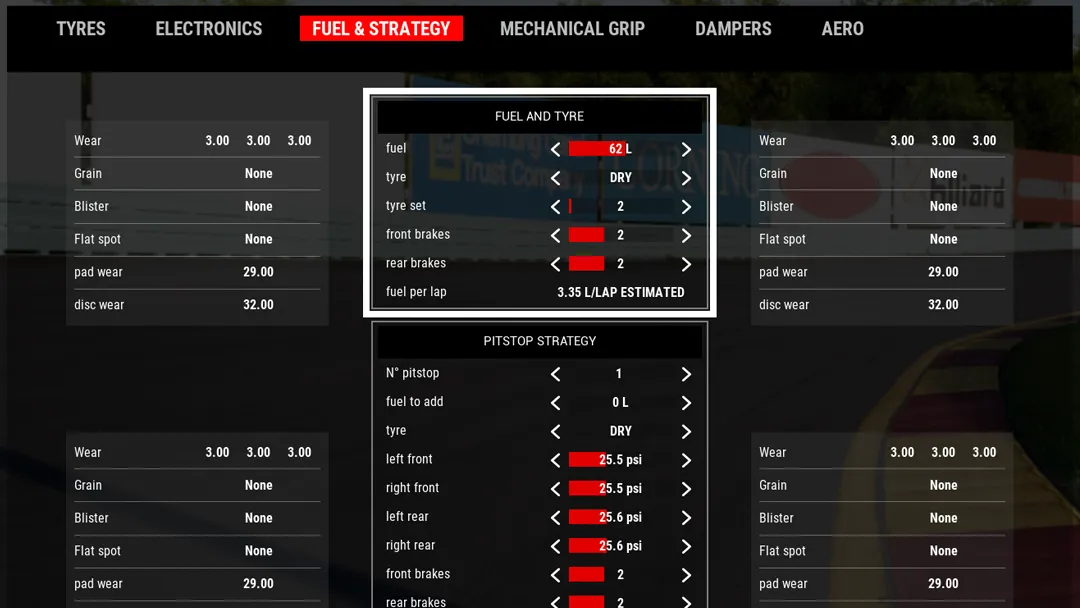
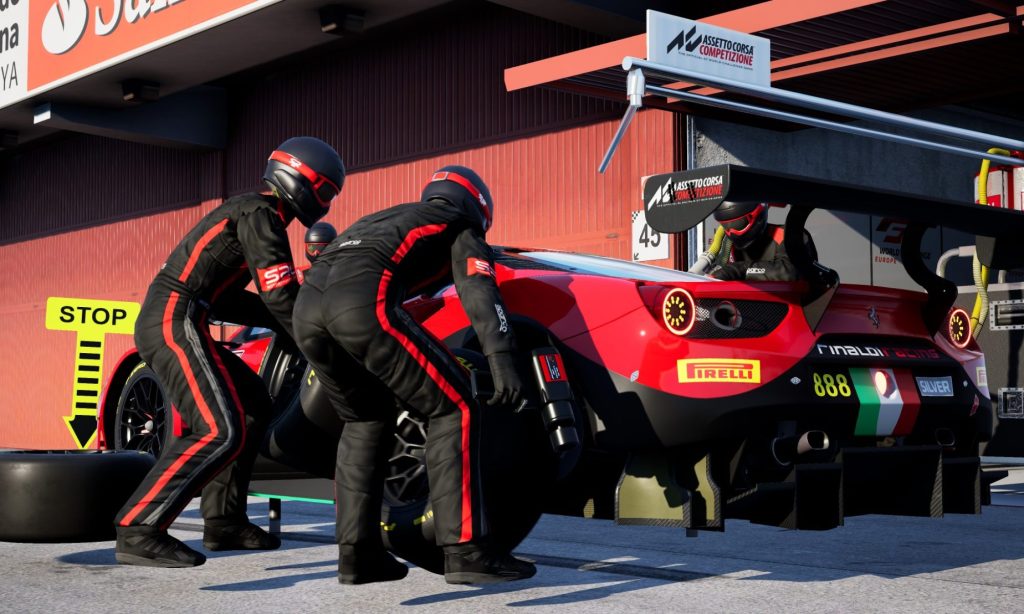
The third and final building block is your actual fuel consumption per lap. Assetto Corsa Competizione is very transparent on this point. Once you have driven three or four consistent laps in a row in free practice, the game shows you in the setup menu under the “Fuel & Strategy” tab or directly live on your digital in-game dashboard exactly how many litres your engine burns per lap.
The formula
Once you have these three values in mind or briefly written down, you simply grab the calculator on your smartphone. To make the formula as clear and tangible as possible, we have divided it into two logical steps for you. As an example, we take a race over 45 minutes, an average lap time of 1:50 minutes (which corresponds to 110 seconds) and a consumption of 2.8 litres per lap.
Step 1: Determine the number of laps
Formula: (Race duration in seconds ÷ lap time in seconds) = Laps driven
Example: 2,700 seconds ÷ 110 seconds = 24.54 laps
Step 2: Calculate the fuel amount
Formula: (Rounded-up number of laps × consumption per lap) + 2 litres buffer = starting fuel
Example: (25 laps × 2.8 litres) + 2 litres = 72 litres starting fuel
The golden rule in sim racing when determining laps is: partial laps are always and without exception rounded up. In the heat of battle, it can always happen that you cross the start-finish line when the race clock still shows exactly one single second of remaining time. That forces you to complete one full additional lap at the limit. Anyone who rounds down here will inevitably be left stranded on the track.

The ironclad safety buffer
You have now calculated your pure race fuel amount. However, anyone who goes out on track with exactly this mathematically correct value is living extremely dangerously and has forgotten a crucial detail of motorsport. The race does not begin only when the lights switch to green and the field is released.
Every serious race includes an introductory lap, the so-called formation lap. On these fiercely contested metres, you may not be driving at absolute race pace, but you are still continuously burning fuel in order to warm up the tyres and bring the brakes up to temperature. In addition, real motorsport is wonderfully unpredictable. Perhaps you spend half the race in the perfect slipstream of an opponent and are suddenly a few valuable tenths of a second faster per lap than you had previously calculated. This additional pace adds up to more lap time overall and thus higher total consumption. That is why our advice is never to treat the calculated amount as absolute, but always to add a buffer of about one additional lap – usually two to three litres – on top.
Dynamic factors: Why your consumption suddenly fluctuates
If you have mastered the manual calculation blindly, you already belong to the best-prepared drivers on the entire grid. A true sim racing expert, however, also understands the dynamic factors that can suddenly make consumption rise or fall while driving. Anyone who can read these influences is able to react strategically to the fuel level even during the race.
Your right foot and your general driving style play the biggest role here. If you are involved in a hard, lap-long battle during the race, rev the gears higher than in practice and squeeze every corner absolutely to the physical limit, your engine will be significantly thirstier. If, on the other hand, you are driving relaxed at the front or deliberately apply the so-called “lift and coast” technique – meaning lifting off the throttle early before the braking zone – you massively reduce consumption.
Another powerful tool available to you directly in the cockpit is engine management. In Assetto Corsa Competizione, this is known as the ECU or engine map. Almost all modern GT3 vehicles allow you to adjust the mixture and power delivery via the steering wheel while driving at speed. Normally, you are on Map 1, which gives you the most power, but also the highest fuel consumption. If you realise in the middle of the race that you badly miscalculated in practice and the fuel will definitely not last until the finish line, you can switch to a more defensive map. This may cost you engine power and therefore lap time, but in case of doubt it will save your finish.
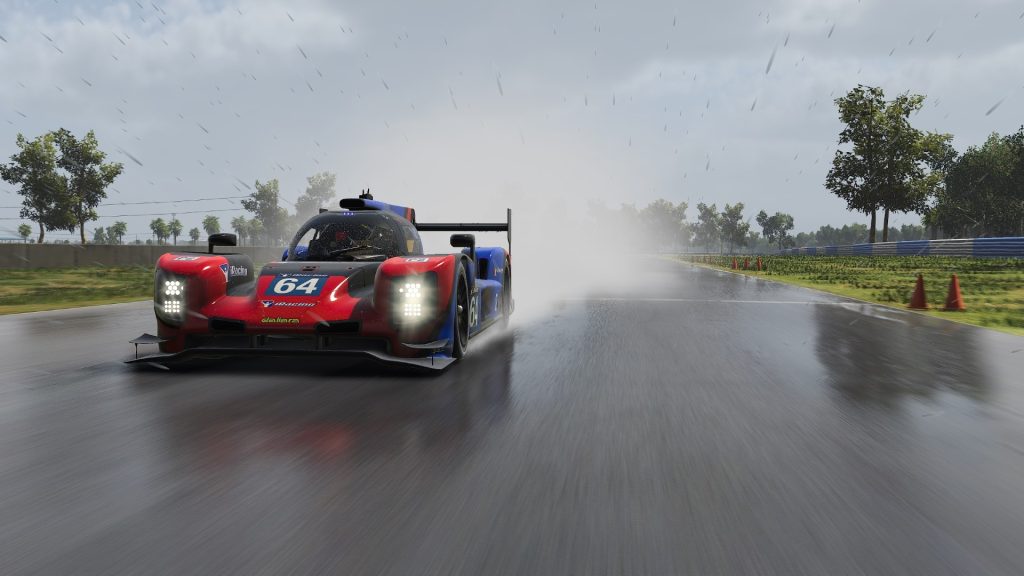
You must also never ignore the external influences of the simulation, because temperature and weather massively change the characteristics of the engine and your driving style. On cool nights, engines work far more efficiently. It becomes extreme, however, in pouring rain. Since you have to be much gentler with the throttle on a wet track, brake much earlier and reach maximum revs less often, your fuel consumption drops drastically. Anyone who stubbornly uses the consumption values from a dry and hot practice session for a wet race starts with a massively overloaded vehicle and gives the competition an unfair advantage from the very first metre.
Last but not least, your technical setup also plays a role that should not be underestimated. A vehicle set up with an extremely steep rear wing for maximum downforce and an aggressive toe angle fights against enormous air and rolling resistance on the long straights. The engine literally has to work harder to reach top speed, which inevitably results in a greater thirst for fuel.
Make yourself independent from the system
At the end of the day, the art of perfect fuel calculation makes you a more complete and more confident sim racer. It does not take thirty seconds on your smartphone to perform this simple mathematics, but the psychological advantage on track is simply priceless. Anyone who knows exactly how long their car will run can focus one hundred percent on the apex of the next corner and the duel with the car in front, without constantly having to glance at the fuel gauge in panic. Get to know your car in all its facets, understand the factors of consumption and calculate your fuel yourself in future like an engineer on the pit wall.