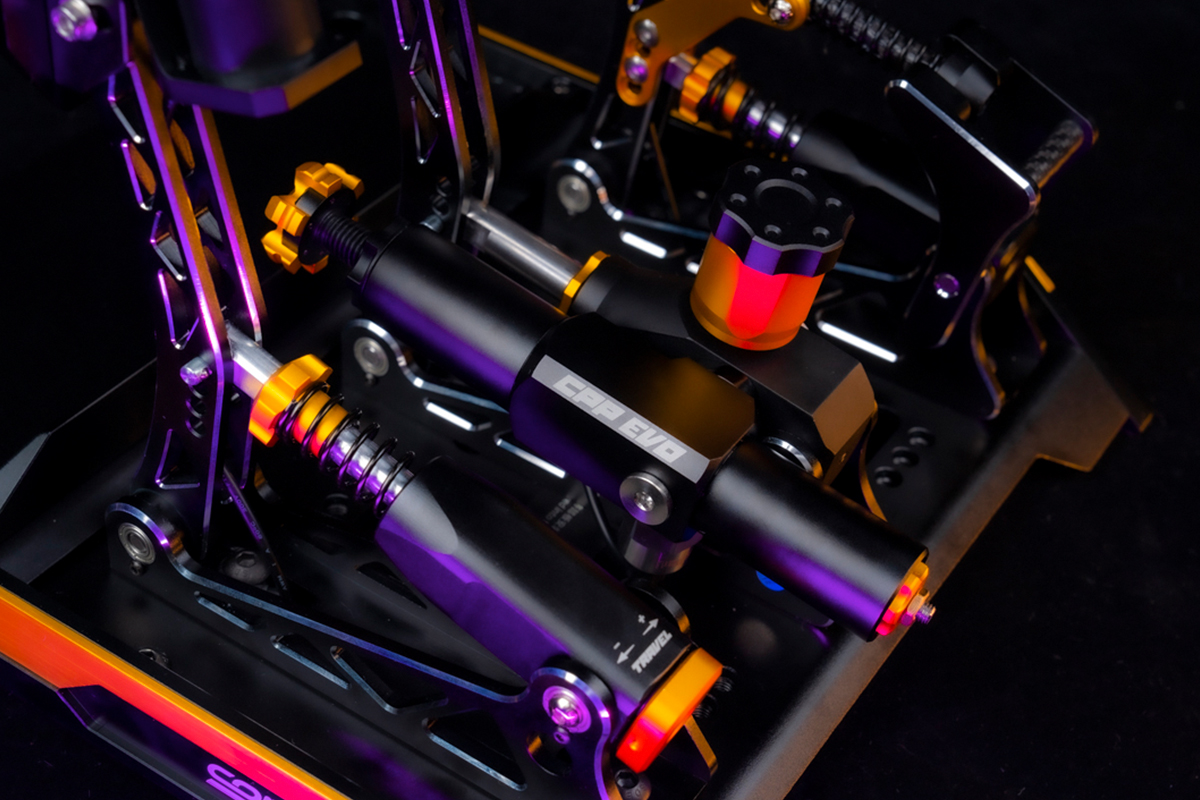
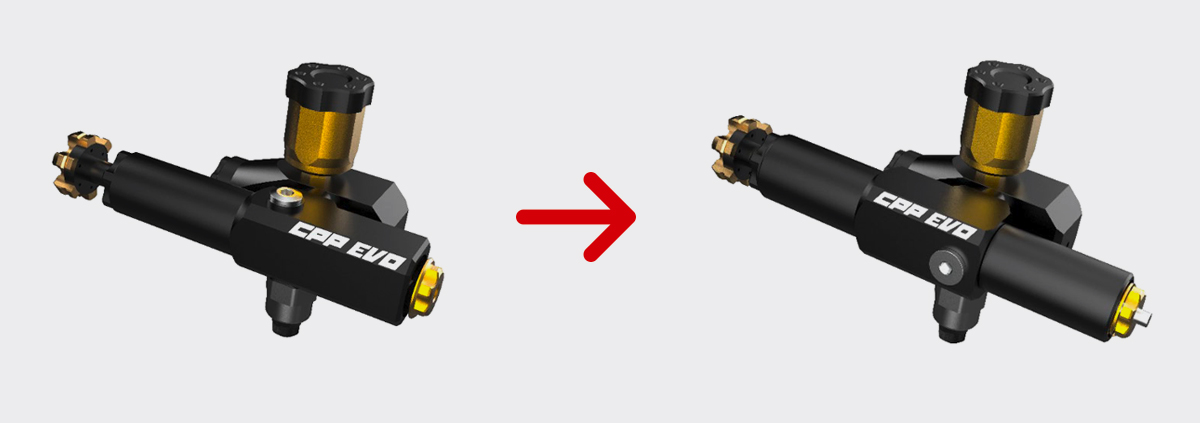
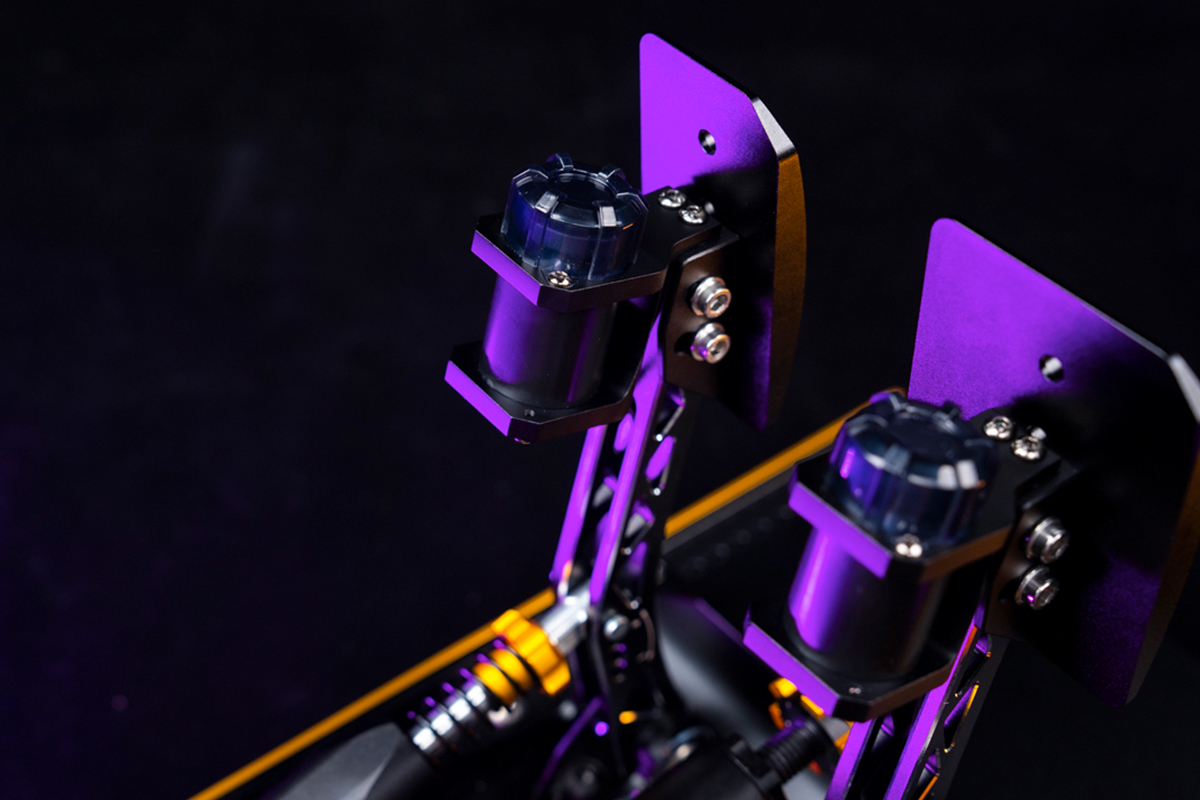
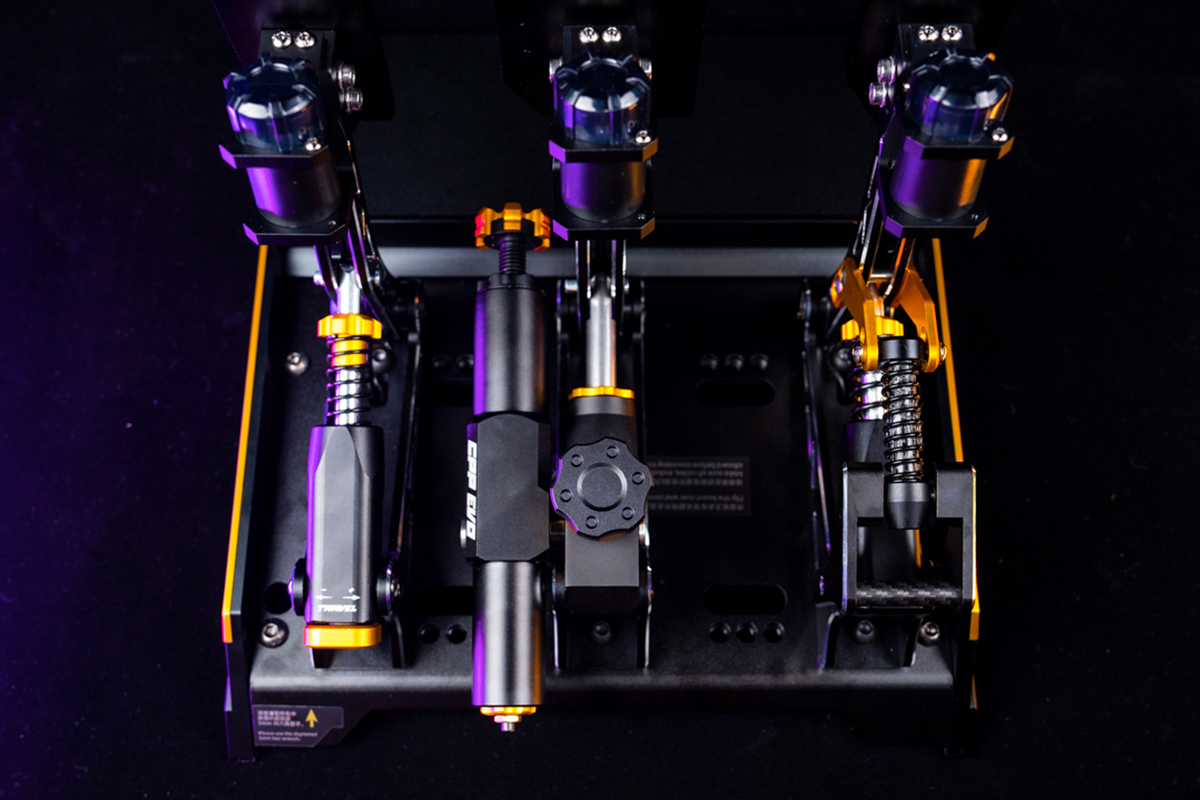
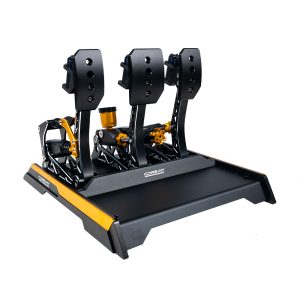
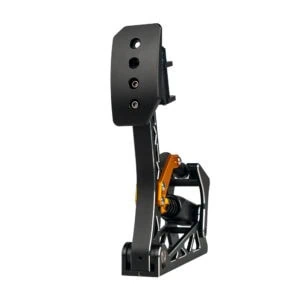
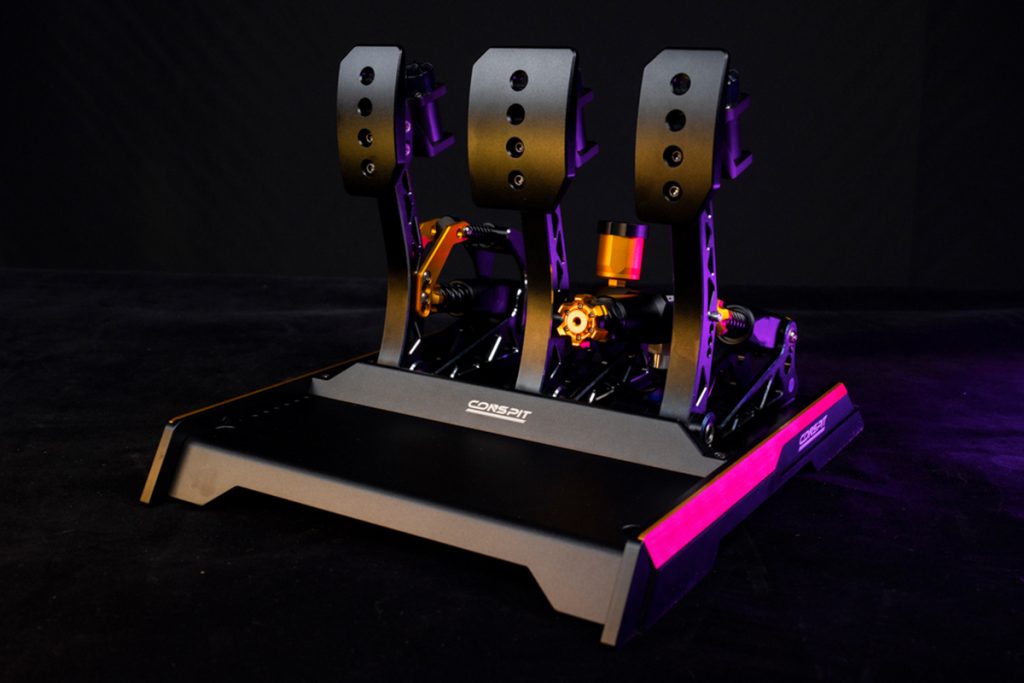
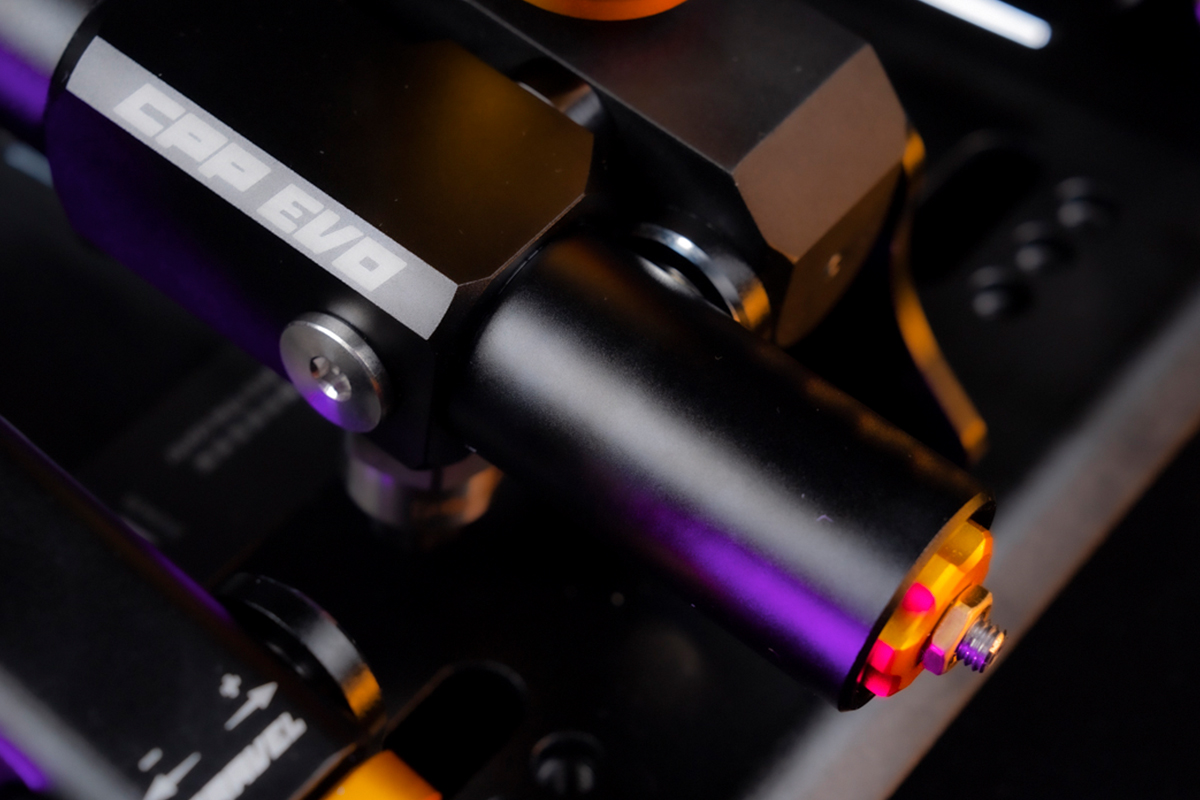
We have been waiting a long time for the update to the popular Conspit CPP.Evo pedals. However, anyone expecting a completely new design at launch may have rubbed their eyes in disbelief: the V2 looks exactly the same as the V1.
Disappointment? Quite the opposite.
In sim racing, what matters is not how good a pedal looks in the rig, but what happens when you’re braking into the hairpin on the final lap with degrading tyres. With the V2, Conspit did exactly what we expect from real hardware development: no cosmetic facelift, but open-heart surgery for performance.
We took a close look at the technical datasheets and the internal changes of the V2. Here is our analysis of why this pedal set mechanically plays in a completely different league than its predecessor.
No more aluminium: the piston upgrade
The V1 was solid, no question. But aluminium pistons in hydraulic systems have a physical weakness: surface hardness and coefficients of friction. Conspit has removed the aluminium piston in the V2 and replaced it with a chrome-plated 45 steel piston.
Why this excites us: Anyone who has pushed hydraulic pedals to the limit knows the risk of the “stick-slip effect.” If the piston slightly tilts under lateral load (caused by foot angle) or if the surface is too soft, controllability suffers. The chrome plating of the new steel piston provides a mirror-smooth, extremely hard surface. For us in the cockpit, this means: less friction, zero flex in the cylinder, and significantly higher durability – even if you’re one of the drivers who hits the brakes with 100 kg+ of force.

The sealing dilemma solved (dual step seal)
This is the point where the wheat is separated from the chaff. The V1 used a standard polyurethane seal. That works, but it generates friction. In the V2, Conspit uses a dual step seal structure (O‑ring + PTFE glide ring).
The tech talk: PTFE (polytetrafluoroethylene) has one of the lowest coefficients of friction of all solid materials. Conspit states that friction has been reduced by around 50%. In addition, the system is now theoretically rated for pressures of up to 400 bar.
What this means on track: Forget the 400 bar – we’re not applying that anyway. But the 50% reduction in friction is massive. The key term here is hysteresis on the return stroke.
During trail braking – that is, slowly releasing the brake towards the apex – many hydraulic systems struggle with the pedal returning slightly slower than the foot releases it (due to seal friction). With the new PTFE system, the pedal practically sticks to the sole of your foot. Releasing the brake becomes just as precise as applying it. This is exactly the tiny margin of control that decides between understeer and perfect rotation.

Hybrid setup: springs meet elastomers
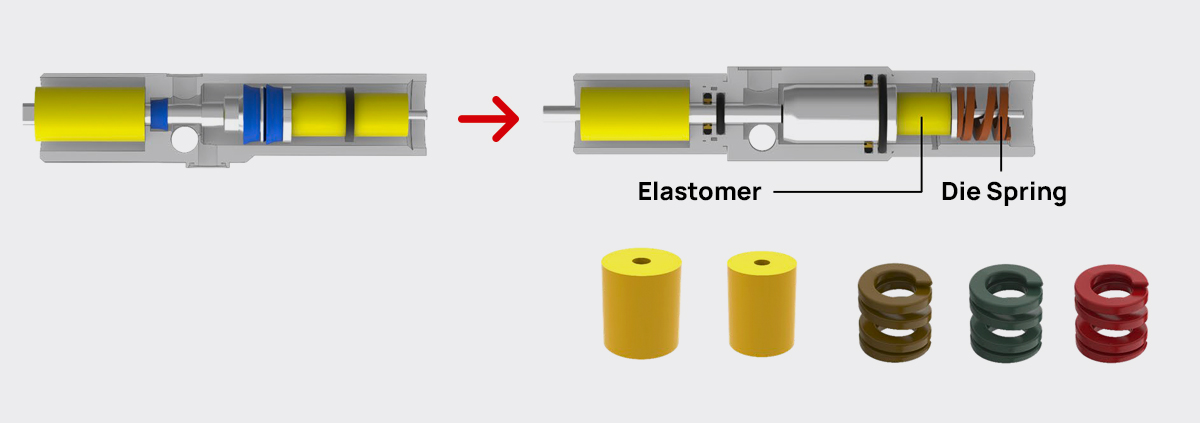
Another detail that stood out positively to us: the move away from a purely elastomer stack towards a true hybrid solution.
The V2 now uses highly linear die springs (tool springs) in combination with elastomers. In the V1, the transition between “free travel” (pads touching the disc) and “pressure build-up” (the wall) could sometimes feel a bit vague, as elastomers are progressive by nature. By using linear springs in the first stage, you now get a crystal-clear pressure point. You can mechanically feel exactly when the free travel is overcome and the hydraulics take over. This makes muscle memory much more reliably trainable.
What remains the same (thankfully)?
We’re glad they didn’t touch the chassis. The CNC-machined 6061-T6 aluminium was already bombproof on the V1. The M‑DVF vibration module is also back on board – still one of the best features in our opinion for feeling ABS engagement or locking wheels directly through the foot via SimHub. This is not toy rumble, but real feedback.
Our conclusion on the release
February 2 marks Conspit’s step from “great value-for-money tip” to “serious engineering.” The CPP.EVO V2 is a pedal for purists. Anyone who wants to understand why they suddenly become more consistent during trail braking will love the internal upgrades of the V2. The upgrade to the steel piston and PTFE seals eliminates the biggest weaknesses of conventional sim racing hydraulics.
The first batches are already in high demand, with deliveries starting from February 8, 2026. Secure your set before the first wave is gone.