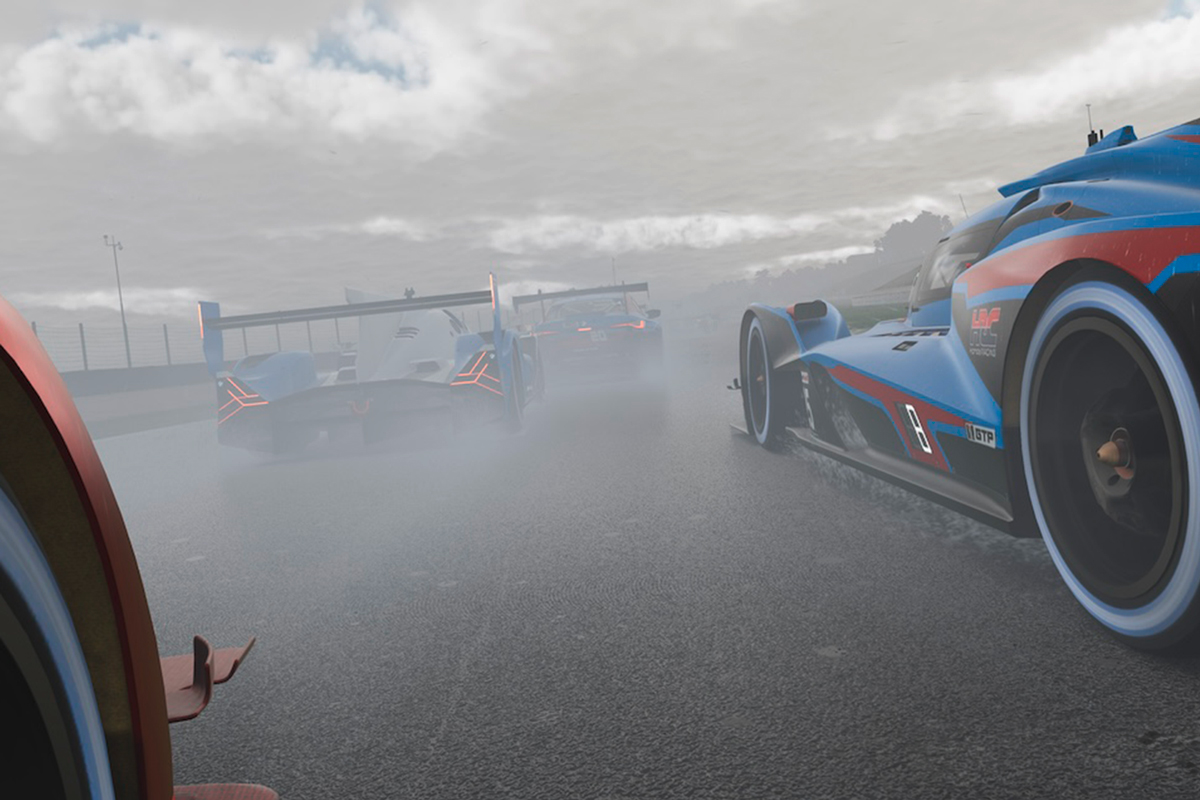
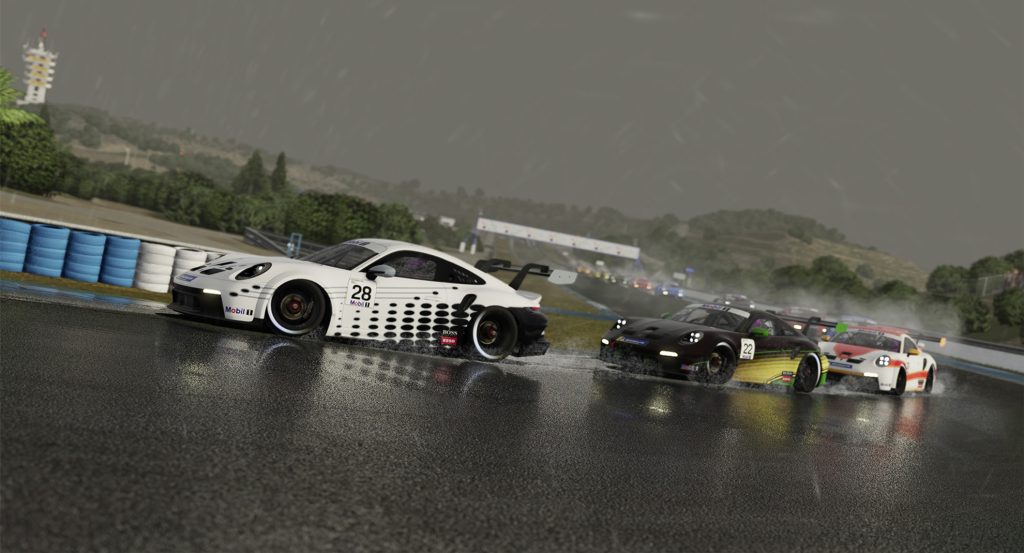
When the clouds roll in and the first raindrops start pelting the windscreen in iRacing, the lobby usually splits into two camps: some panic, whilst others see their big chance. Wet conditions are the ultimate test of your adaptability as a driver. Grip levels plummet, braking distances feel like they’ve doubled, and even the slightest mistake with the steering wheel or pedals is punished mercilessly. What might have secured top times in dry conditions – extremely late braking, aggressive steering and early full throttle – becomes a direct ticket into the crash barrier on wet tarmac.
x
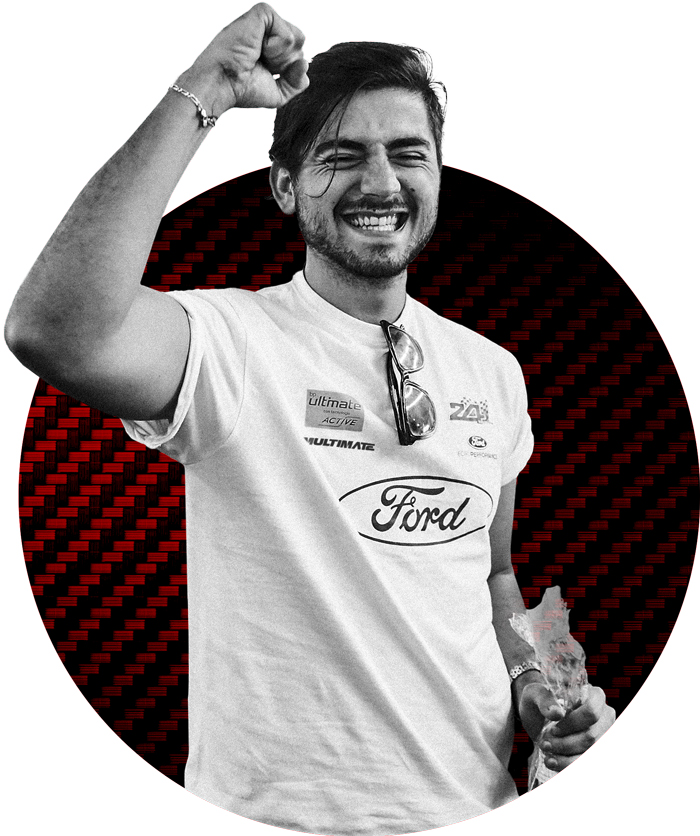
But driving in the rain is not a game of chance, it is a craft. Our head coach Jesús Sicilia repeatedly sees in his coaching sessions at SimUltimate that driving in wet conditions is the ultimate differentiator between average and excellent drivers. If you learn to adapt to the conditions, rain turns from a nightmare into your greatest strategic advantage. Let’s take a look together at the five key areas that Jesús focuses on during telemetry analysis and that you must work on to dominate even in wet conditions.
1. The art of smooth deceleration
Anyone who brakes in the rain as they would in dry conditions has usually already lost the car before the apex. A hard hit on the brakes immediately overloads the already struggling tires. The result is a stuttering ABS, locking wheels, and a car that mercilessly slides straight ahead. The solution lies in the gentleness of your braking foot. You must brake significantly earlier and, above all, more smoothly. Instead of aggressively searching for the pressure point, you practically massage the pedal and build up brake pressure progressively. In addition, you should drastically reduce trail braking—that is, braking deep into the corner. Complete the vast majority of your deceleration on the straight while the car is still stable, and roll more calmly into the corner.
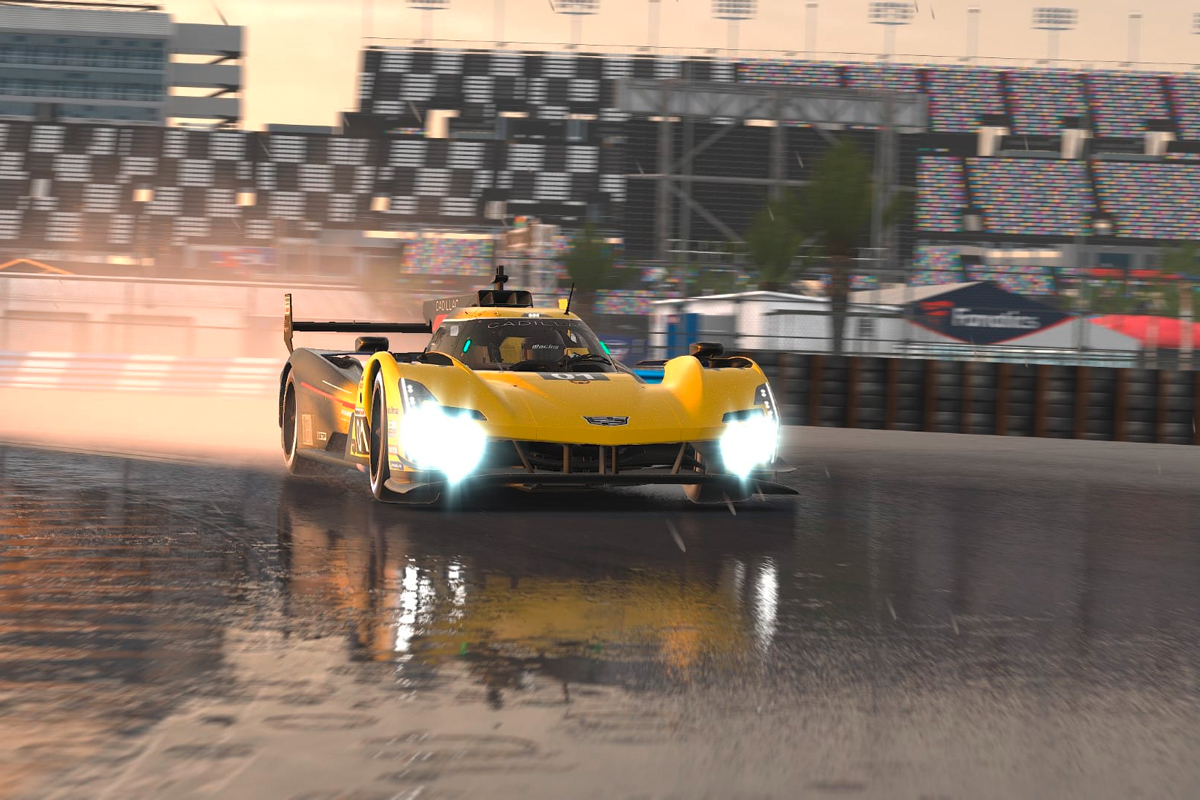
2. The search for rough asphalt
The biggest mistake in wet conditions is stubbornly sticking to the usual racing line. In the dry, the dark rubbered-in line is your best friend; in the rain, it becomes an absolute ice rink. iRacing simulates this physical phenomenon extremely precisely. The solution is consciously driving the so-called wet line. You must steer where others are not. Approach corners slightly wider on entry, where the asphalt is rougher and less washed, and only cut back in late to position the car for the straight. Those who avoid the rubbered racing line and look for grip in the “dirty” areas suddenly find unexpected traction.
3. Patience at corner exit
Nothing ends a rain race faster than an overconfident push on the throttle at corner exit. Anyone who gets on the power too early and too aggressively immediately provokes spinning rear wheels or forces the traction control into heavy, time-consuming intervention. In the rain, your right foot is your most important assist system. Patience is the highest virtue here. Wait until the car is almost completely straight after the apex, and then gently roll on the throttle. You have to feed the power into the asphalt rather than forcing it onto the car. The smoother you act, the more forward momentum you carry onto the next straight.
4. Flow at the steering wheel
A nervous steering wheel inevitably leads to a nervous car. Jerky steering inputs or constant, hectic corrections mid-corner completely upset the car’s weight transfer. Since mechanical grip is significantly reduced in wet conditions, the suspension cannot process these sudden inputs and responds with understeer or a brutal rear-end snap. Force yourself to steer more consciously and fluidly. A soft, consistent steering input keeps the chassis stable, does not disturb the balance, and preserves the valuable grip at the front axle.

5. The setup as a safety net
Anyone trying to plow through a monsoon with a stiff, aggressive dry setup is simply making life unnecessarily difficult. An extremely stiff suspension and low downforce make the car almost undriveable on a wet track. A good wet setup must forgive mistakes. Soften the suspension so the car can work more during weight transfer and build mechanical grip. You should also move the brake balance (brake bias) slightly forward to prevent the rear from stepping out under braking. Electronic aids such as ABS and traction control can also be set a bit more defensively and with more intervention. One extra click of rear wing may cost some top speed on the straight, but it gives you the confidence needed to push the car to the limit at all.
The next time you leave the pit lane in wet conditions, don’t see the rain as an enemy. Rain is essentially nothing more than an extreme amplifier of your car’s feedback. Every driving mistake is magnified, but that is exactly what makes wet conditions the best teacher for your driving technique. If you stop fighting the water and start adapting to the conditions with a smooth, analytical driving style, you will ultimately become a more consistent and faster driver even in the dry.

Do you want to break through the wall?
There is no shame in being stuck on a plateau. But it is unnecessary to stay there.
Jesús Sicilia not only brings experience from the highest eSports leagues, but also an understanding of real racing physics. He knows how to read data and teach driving techniques that truly make you faster.
Stop guessing and start training with purpose. Book your personal 1‑to‑1 coaching now