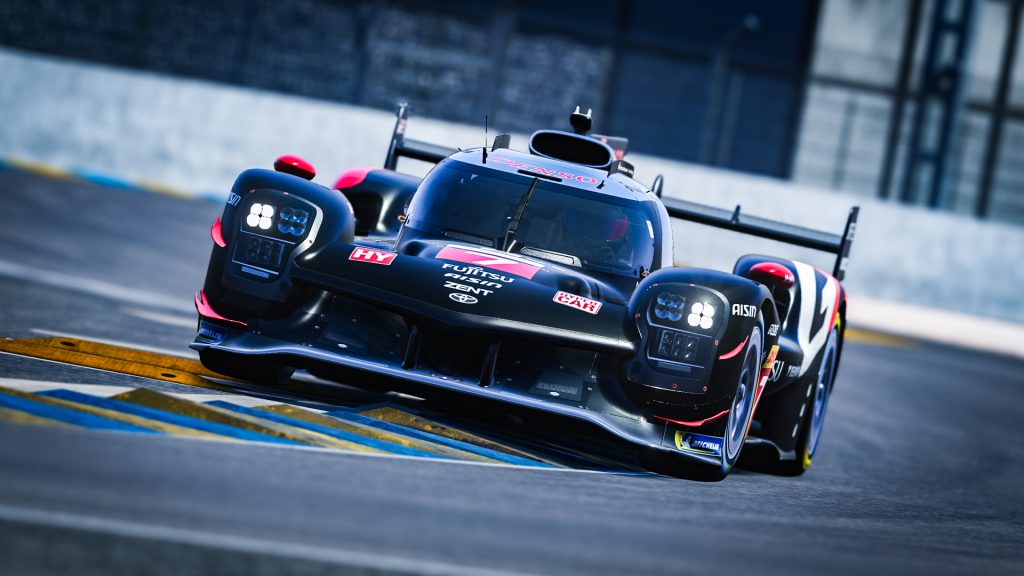
Anyone can put their foot down on the long straights at Le Mans or Daytona. But races and iRatings are won – or lost without mercy – in the corners. Unlike pure acceleration, a corner demands a highly complex interplay of braking pressure, steering angle and throttle position, whilst constantly balancing on the fine line of maximum grip. Even the tiniest mistake at the entrance to a corner compounds by the time you reach the exit, not only ruining your lap time but also dramatically increasing tyre wear.
The good news is: Most of these mistakes are absolutely typical and, above all, correctable. Our SimUltimate Head Coach Jesús Sicilia knows exactly where sim racers leave the most valuable tenths of a second behind from his eSports career and countless telemetry analyses. If you understand and eliminate these mistakes, you will not only become faster in individual moments, but above all more consistent over the entire race distance.
Here are the five most common cornering mistakes that Jesús sees in almost every driver – and how a professional coach fixes them.
1. The illusion of extremely late braking
The ego often whispers to us sim racers that the one who brakes the latest is also the fastest. That is a fatal misconception. Anyone who overshoots the braking point loses the ability to slow the car down sufficiently before the apex. The result is brutal understeer. You miss the apex, slide wide to the outside and ruin the entire acceleration phase for the following straight.
The coach’s view: Jesús preaches consistency over aggressiveness. In the telemetry, he does not look for the latest braking point, but the most stable one. He works with drivers on finding fixed reference points on the track – a sign, a spot on the asphalt or the beginning of a curb. Only when the driver hits this point absolutely perfectly ten times in a row and takes the corner cleanly is the braking point moved back in tiny steps in order to explore the absolute limit.
2. The panicked, premature turn-in point
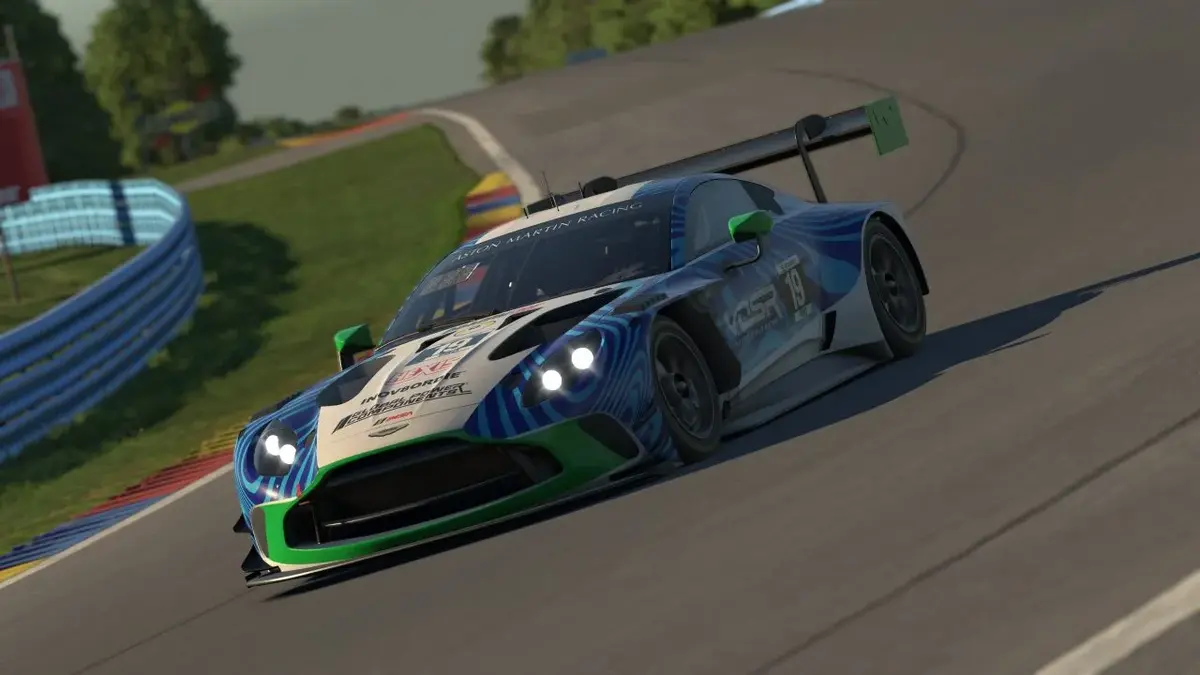
Out of a certain mental rush, many drivers tend to yank the steering wheel toward the inside of the corner far too early. Early turn-in inevitably leads to an extremely flat, tight cornering line. This comes back to haunt you bitterly at the corner exit: Because the radius becomes tighter and tighter toward the end of the corner, you simply run out of track. You have to lift off the throttle or, in the worst case, even brake to correct.
The coach’s view: Here Jesús focuses strongly on visual training (vision control). He trains drivers to aim for the so-called “late apex.” By deliberately delaying turn-in, you straighten the car much earlier again at the corner exit. A straight steering wheel means that you can get back on full throttle much earlier and more aggressively, which brings massive speed advantages on the following straight.
3. The ignored weight transfer
Many sim racers view their virtual car as a static box. But from a physics perspective, everything in a corner revolves around the transfer of mass. If you brake hard, you push the weight onto the front axle. If you get on the throttle, you unload the front and press the rear into the asphalt. Anyone who ignores this dynamic and operates the pedals in a purely digital way provokes massive understeer on entry or uncontrollable oversteer in the middle of the corner.
The coach’s view: For Jesús, the feel for weight transfer is the key to the masterclass. He analyzes what is known as “trail braking” with extreme precision. He teaches drivers not to release the brake abruptly when turning in, but to reduce the pressure gently and smoothly. This keeps enough weight, and therefore grip, on the front tires to let the car rotate willingly into the corner without destabilizing the rear.
4. The impatient right foot at the exit
The adrenaline is pumping, you see the straight ahead and you hammer your foot onto the throttle far too early and too hard. The rear breaks out immediately, the tires spin (wheelspin) or the traction control brutally reduces engine power. All of this not only costs lap time immediately, but literally burns the rear tires, which takes extreme revenge later in the race.
The coach’s view: Jesús conveys a very visual concept here: The throttle pedal is not an on-off switch, but a dimmer. He teaches the golden rule of correlation between hands and feet. The position of the throttle pedal must mirror the opening of the steering wheel. Only when the steering wheel is almost completely straight again at the corner exit may the throttle pedal be pressed down one hundred percent. This progression saves tires and lap times.

5. The grueling fight against physics (overdriving)
Probably the most fundamental mistake is demanding more from the car in every single corner than the mechanical and aerodynamic grip allows. Anyone who exceeds the limit of the tires forces the car into a permanent state of sliding. The tires overheat, the grip collapses completely and lap times fluctuate uncontrollably. This “overdriving” usually comes from the wrong attempt to force pace through pure aggression instead of through precision.
The coach’s view: When Jesús sees wildly twitching telemetry graphs and overheated tires, he immediately pulls the emergency brake. He takes the aggressiveness out of the driving style and asks the driver to define a target time that they can drive effortlessly and without the slightest mistake for ten to fifteen laps in a row. Only when this flawless consistency – this “smoothness” – has been achieved is the pace gradually increased. Calm in the cockpit is the true secret of speed.

Do you want to break through the wall?
There is no shame in being stuck on a plateau. But it is unnecessary to stay there.
Jesús Sicilia brings not only experience from the highest eSports leagues, but also an understanding of real racing physics. He knows how to read data and teach driving technique that truly makes you faster.
Stop guessing and start training with purpose. Book your personal 1‑to‑1 coaching now