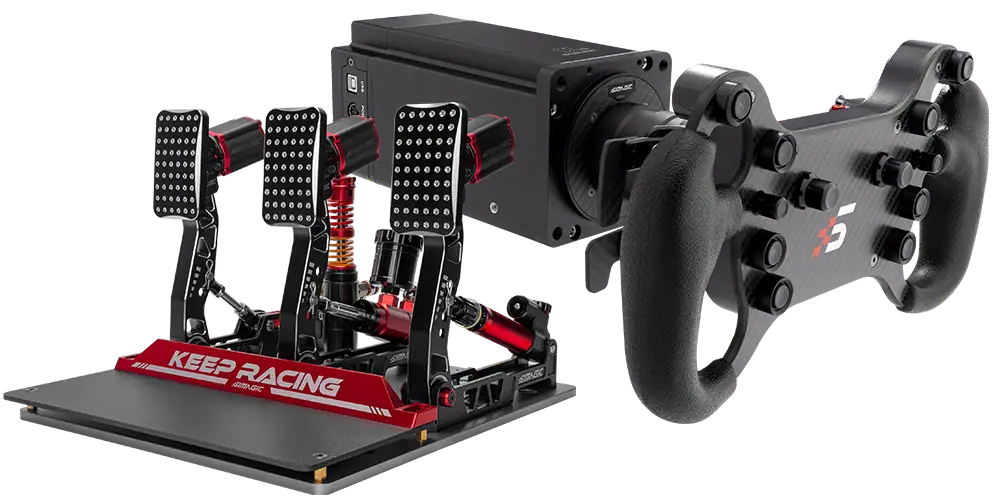
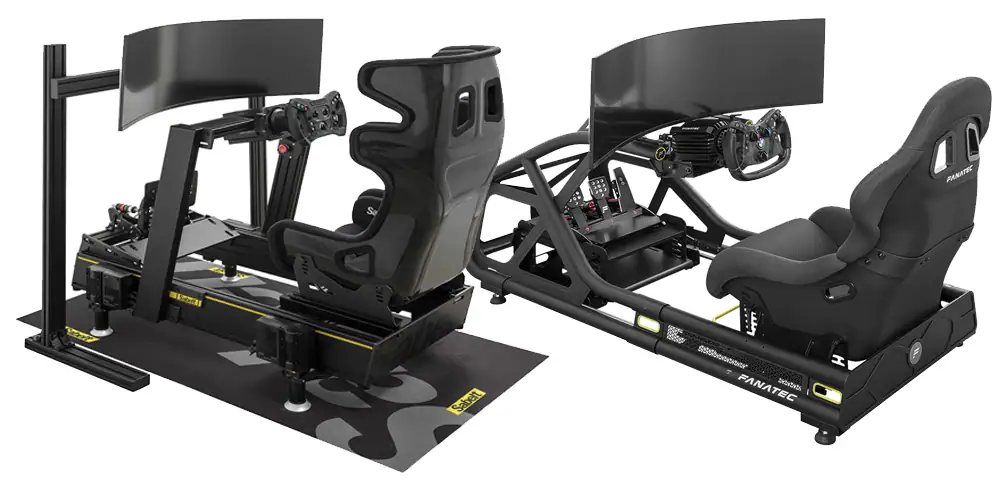
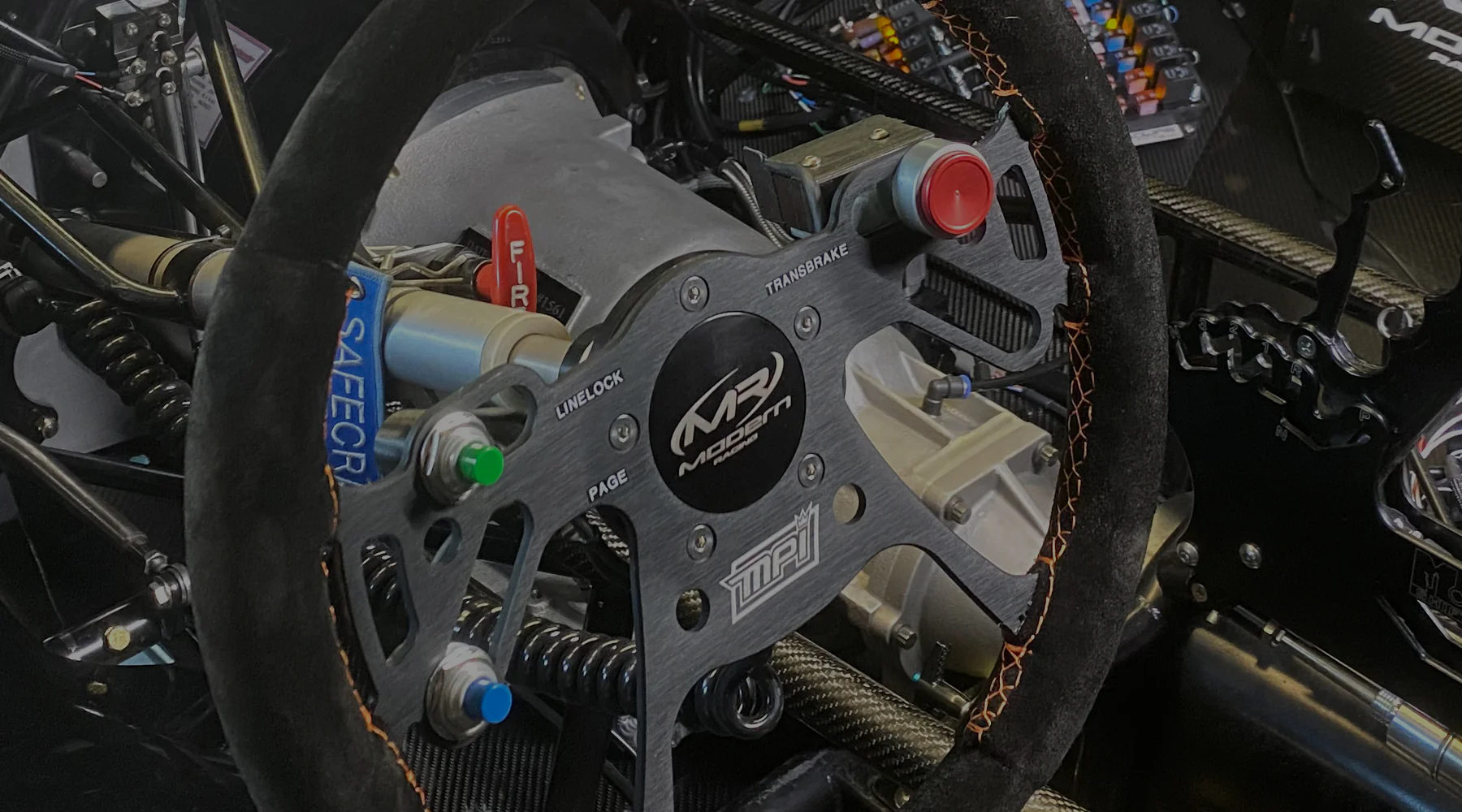
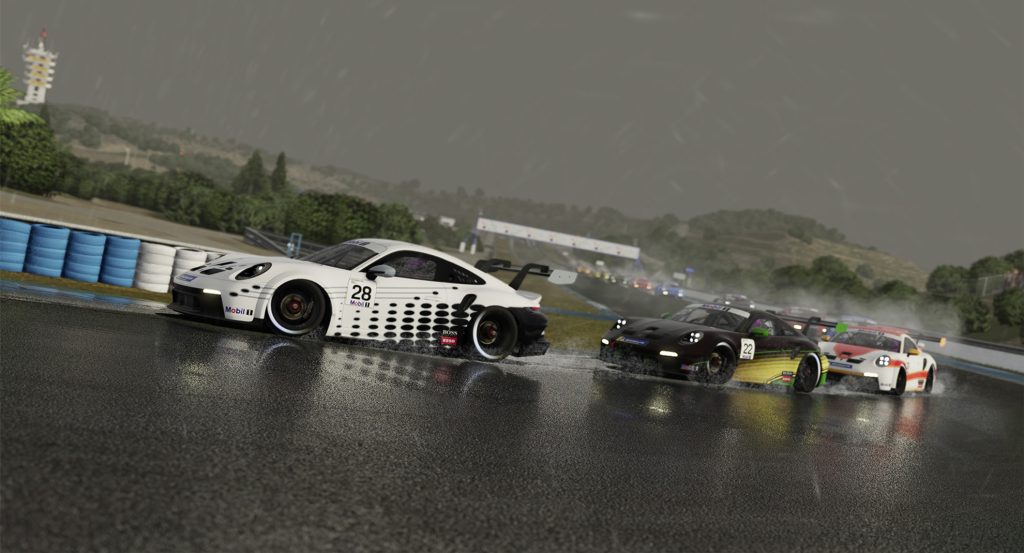
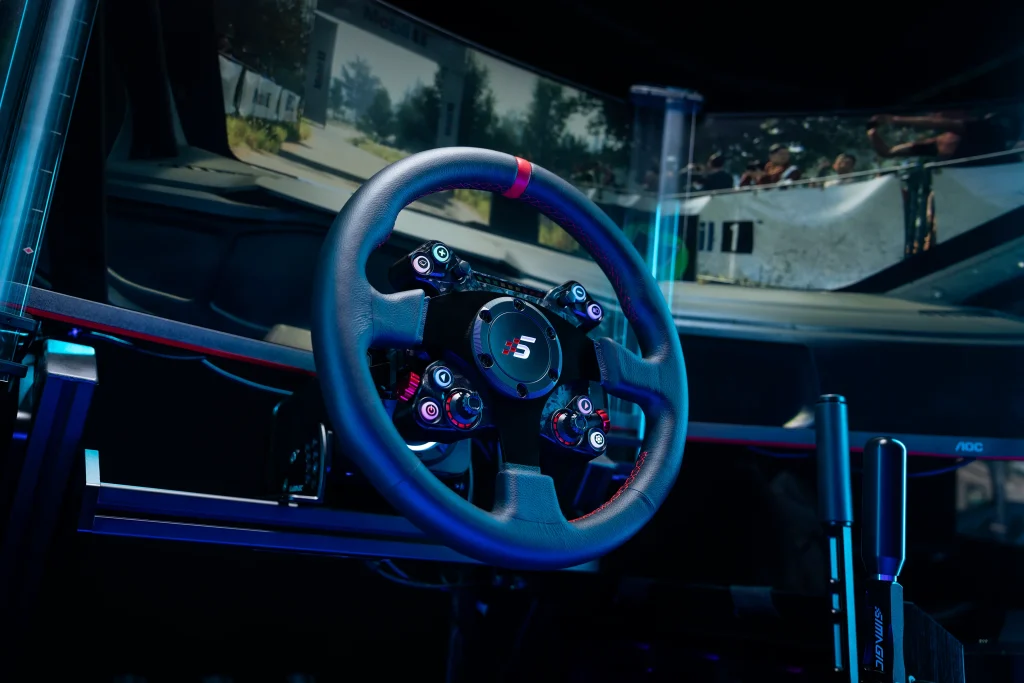
We have observed an interesting phenomenon in the sim racing community, which we like to refer to as the ”Formula 1 paradox”. When enthusiasts put together their first high-end rig, they often spend hours debating Newton metres, load cell pressure points and monitor response times. But when it comes to choosing the steering wheel itself – the primary haptic interface between man and machine – it is often the eye that makes the final decision. They go for the most futuristic, aggressive Formula-style rim because it simply looks the fastest in the shop.
Yet the reality on the virtual track quickly catches up with many drivers. Anyone trying to master a rally stage with a GT or Formula wheel, or initiate a drift in a road car, suddenly finds themselves fighting their hardware more than the clock. The shape of a steering wheel is not an aesthetic gimmick. It is pure physics and ergonomics.
At SimUltimate, we want to dive deep into the subject today and explain why the right “tool” for each discipline is crucial, and how the shape of the rim influences your driving behavior, your muscle memory, and even your perception of force feedback.
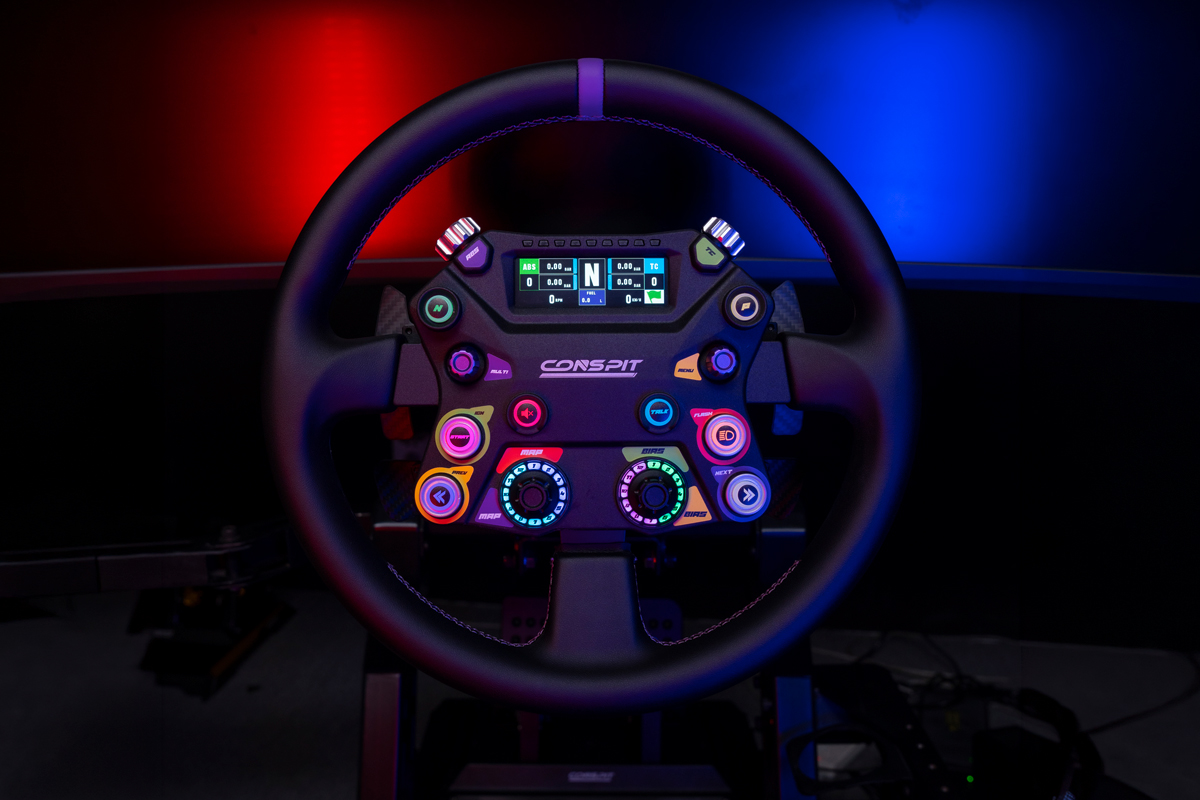
The Physics of Round: Why the Classic Is Unbeatable
Let’s start with the often underestimated classic round wheel. In an era where many rigs look like spaceship cockpits, a simple round leather wheel almost seems antiquated. But that impression is highly misleading. For certain vehicle classes and driving styles, the circular shape is physically necessary.
To understand this, we need to look at steering ratios. In road cars, historic race cars, drifting, and rallying, we work with large steering angles – often 900 to 1080 degrees lock-to-lock. This means the driver’s hands are constantly moving. Techniques such as hand-over-hand steering or allowing the wheel to slide through open palms (“letting the wheel spin”) are essential to catch the car.
A round rim provides a homogeneous, uninterrupted gripping surface. No matter at what angle the car sits relative to the road, you will always intuitively find grip. Anyone who has tried to catch a sliding rally car with a rectangular Formula wheel knows the painful problem: the moment you need to re-grip, you grab into thin air. Worse still, when the steering snaps back quickly, the protruding grips of an angular wheel can strike thumbs or wrists. With the forces of a modern direct-drive base, this presents a real risk of injury.
For simulating road cars, drift events, or the wild chase over gravel stages, a round wheel is therefore not just an option but an ergonomic necessity. It enables the “flow” these disciplines demand.

The Formula Wheel: Precision Through Restriction
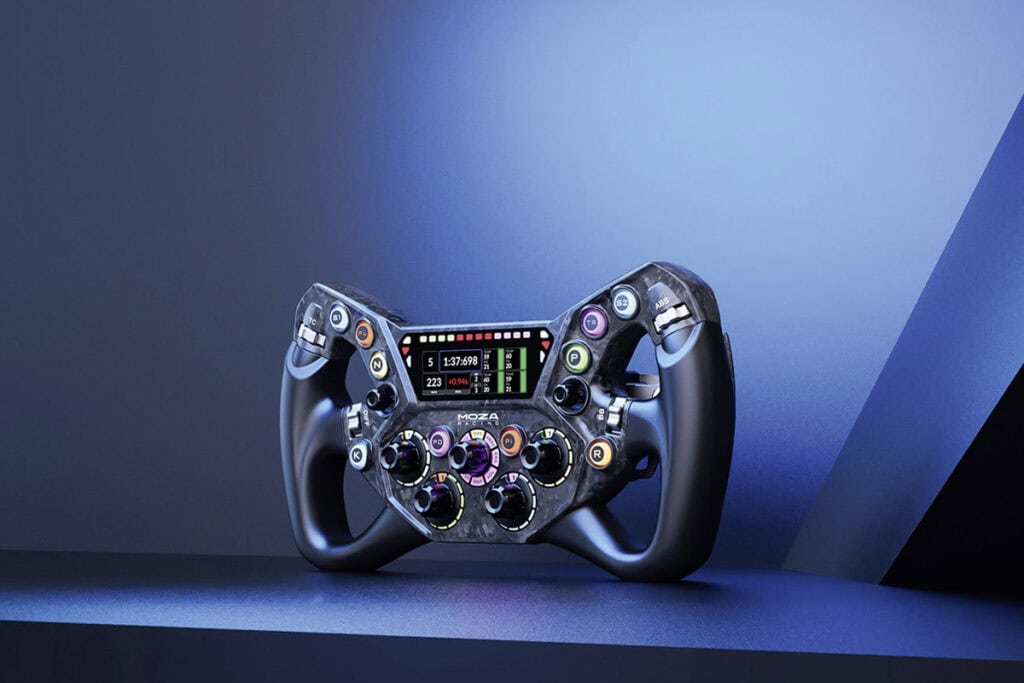
But why do flat-bottom or open-top wheels (butterfly/Formula style) dominate modern motorsport? The answer lies in specialization. In modern GT3, LMP, or Formula cars, steering is extremely direct. The driver’s working range is usually limited to a maximum of 180 to 270 degrees in either direction. Re-gripping is neither intended nor technically necessary. The hands remain permanently in the “quarter-to-three” position.
The shape of these wheels is designed to “lock” the driver into this ideal position. Ergonomic contours force the hands into the perfect posture. This brings massive advantages in precision: since the hand position relative to the wheel never changes, the driver develops extremely precise muscle memory. Every millimeter of steering input is executed exactly the same way each time. In addition, all vital controls – from brake bias to traction control – remain within thumb reach at all times. You operate the vehicle systems without ever loosening your firm grip.
Another technical aspect is diameter. Formula wheels are often smaller (approx. 280–300 mm) than round wheels (approx. 320–350 mm). The physical law of leverage ensures that with a smaller diameter, the base’s force feedback feels stronger, more immediate, and more detailed. Fine surface irregularities and tire behavior are transmitted more clearly, which is crucial when chasing the last tenths of a second on smooth asphalt.
Visibility also plays a role: in low seating positions, a large round upper rim would often obstruct the view of the horizon or dashboard. Cutting off the upper section solves this problem elegantly.

Deep Dish: The Search for Analog Immersion
There is a third category often overlooked by beginners but highly valued by enthusiasts: dished steering wheels (deep dish). These originated in rally and touring car racing from the 1970s to the 1990s.
Here, the rim is strongly offset forward relative to the hub. Mounting such a wheel changes the entire ergonomics of the rig. The rim moves closer to the driver’s upper body, altering elbow angles and often allowing better vehicle control during large steering movements without having to reposition the base itself.
These wheels typically have no flat bottom and very few buttons. They convey a raw, analog driving feel. Anyone who enjoys historic touring cars, classic road cars in Assetto Corsa, or Dirt Rally will often find the highest level of immersion here. It feels mechanical and “real,” far removed from the computer aesthetic of modern GT wheels. A small detail like the usually yellow or red marker at the 12 o’clock position serves as an important visual reference in the chaos of a drift.

The Material Dilemma: Alcantara vs. Everyday Use
One point often overlooked when making a purchase decision is material choice. Many high-end wheels come wrapped in Alcantara or suede to imitate the look of real race cars. This offers excellent grip and feels premium – but only under one condition: you must wear gloves.
Without gloves, sweat and skin oils attack the sensitive material in a very short time. The fibers clump together, the wheel becomes smooth, greasy, and unattractive. Moreover, suede paradoxically provides less grip on bare skin than it does with proper racing gloves.
You have to ask yourself honestly: how “casual” do you want your hobby to be? Anyone who just wants to relax for 30 minutes in the evening often finds putting on gloves to be a barrier. Gloves also make it considerably harder to use keyboards, smartphones, or touchscreens on the rig. If comfort is your priority, high-quality smooth leather or special rubber compounds are often the better choice. However, those chasing the last ounce of realism will not get around Alcantara and gloves – just like Lewis Hamilton.

The Paddle Shifter Issue
Finally, a technical detail that often only becomes apparent during use: paddle shifter accessibility. With a Formula wheel, where the hands are fixed in place, the paddles always sit perfectly behind the fingers.
However, when driving rally with a round wheel and rotating the wheel 180 degrees, the paddles suddenly end up on the wrong side or upside down. In the heat of a hairpin, intuitively shifting up or down becomes a gamble. For this reason, real rally cars often use a fixed sequential shifter or a paddle that does not rotate with the wheel. Anyone planning to drive a lot of rally or drift should therefore budget not only for the wheel but also for a separate shifter, as wheel-mounted paddles often become useless in these disciplines.
The analysis clearly shows: there is no single perfect steering wheel for every situation. Trying to do everything with a Formula wheel sacrifices control in rally and drift. Owning only a large round wheel means losing precision and feedback detail in formula cars. Thanks to the widespread adoption of modern quick-release systems, the most professional solution today is often diversification. A more affordable round rim for wild, dynamic disciplines and a precise, smaller Formula or GT wheel for clean circuit competition.
Our advice at SimUltimate: Detach yourself from purely visual purchasing decisions. Analyze which simulations you truly drive and choose the tool that biomechanically fits the task. Your lap times – and your wrists – will thank you.