With DisplayDash, Heusinkveld presents a true innovation. The Dutch company is expanding its portfolio for the first time with a display-based input device. The result is a sophisticated hybrid concept combining a button box and digital dashboard, which aims to reinterpret operation, overview and ergonomics.
The Idea Behind the DisplayDash
At its core, the DisplayDash follows a clear principle: physical inputs should always remain understandable, context-aware, and flexible. Traditional button boxes offer many input options, but usually rely on static labels or stickers. These are inflexible, often hard to read, and need to be changed whenever you switch vehicles or simulators.
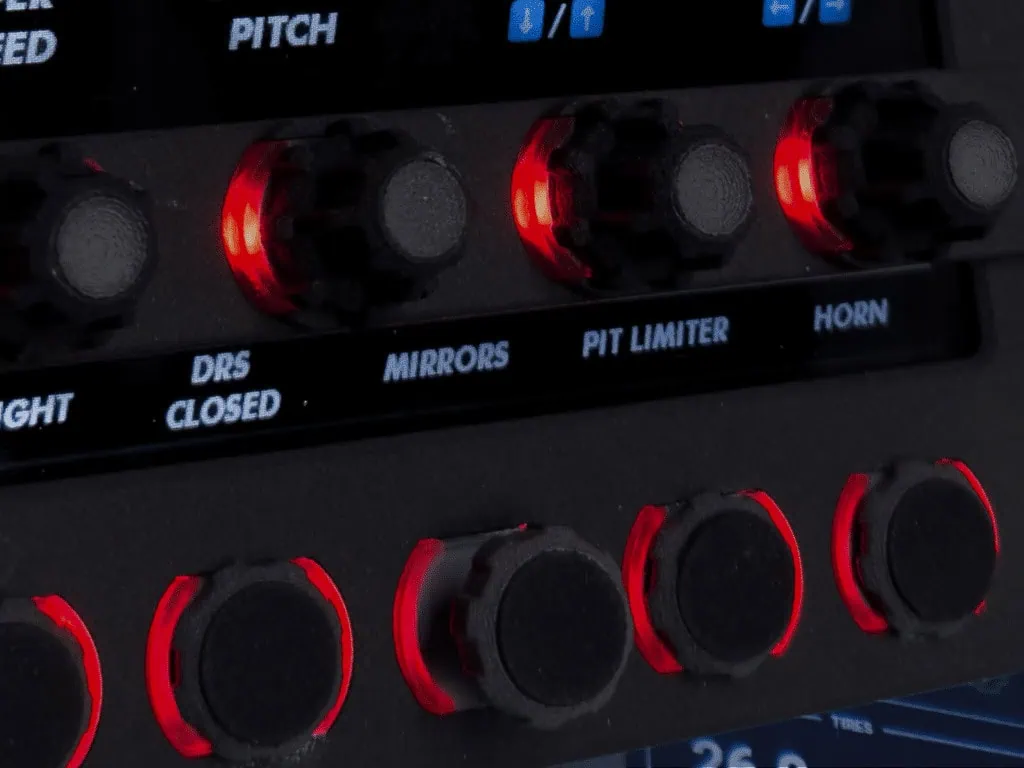
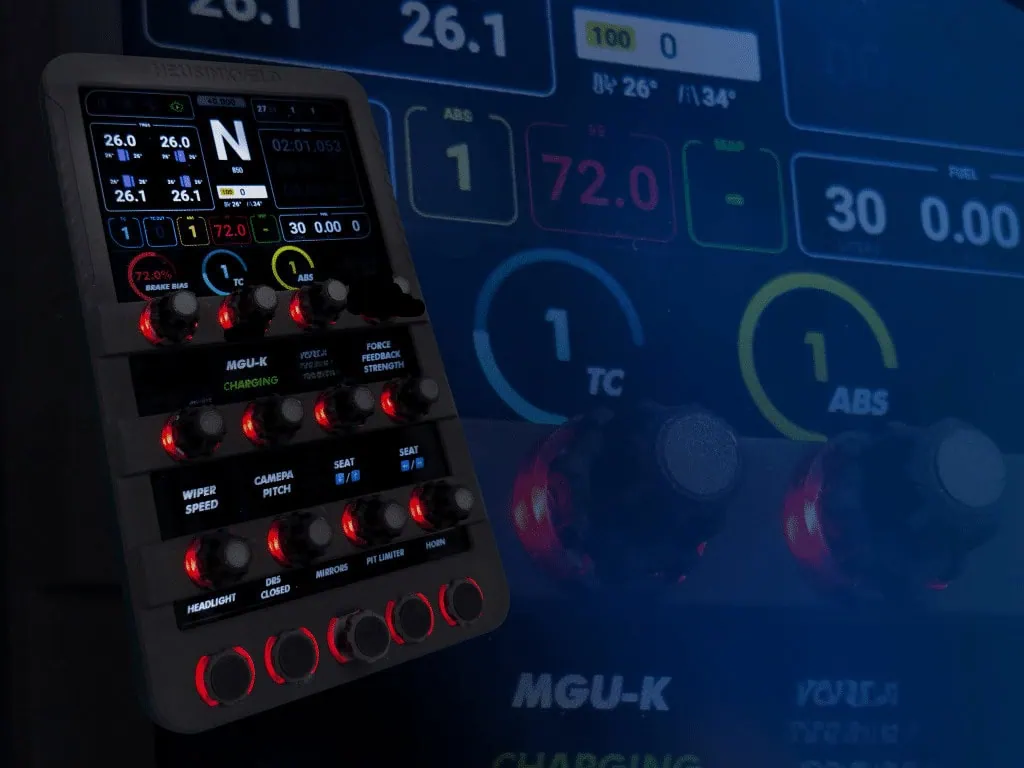
The DisplayDash addresses this issue decisively. Above each control element, the current function name, status, or value is shown directly on the integrated display. This way, the driver always knows which function is assigned and in what state it is—without mental remapping, without labels, without compromises.
Button Box and Dashboard in One Device
Traditionally, button boxes and dashboards are two separate components in a sim rig:
- Button boxes provide quick access to auxiliary functions such as wipers, lights, hybrid modes, or the pit limiter
- Dashboards display driving data like gear, RPM, fuel level, or warning messages
The DisplayDash combines both worlds in a single, compact device. The upper section features a freely configurable digital dashboard area, while below it sits a row of high-quality control elements that are directly linked to visual information.

Inputs with Dynamic Context
The DisplayDash offers an impressive range of input options:
- 12 push rotaries
- 4 push buttons
- 1 seven-way switch
Each of these elements can be individually assigned. The real highlight, however, is the dynamic context: depending on the simulator, vehicle, or current assignment, the display directly above each element shows the relevant information. In addition, the integrated RGB LEDs can be freely configured, including color changes or pulsing effects for status feedback. Stickers or fixed labels are therefore a thing of the past.
Full Integration with SimHub
The DisplayDash is fully compatible with SimHub and can be extensively configured through it. Both the visualization of the control elements and the upper dashboard area can be customized individually. The entire screen is also touch-enabled, opening up additional interaction possibilities—such as page switching, presets, or extended displays.
Thanks to SimHub integration, the DisplayDash dynamically adapts to the capabilities of the respective simulation and the vehicle being used.
Thoughtful Hardware for Sim Racing Rigs
On the hardware side, Heusinkveld stays true to its philosophy: functional, high-quality, and practical.
- Connection via a single USB cable
- No HDMI or DisplayPort connection required
- Standardized 100×100 VESA mount for flexible rig integration
- Integrated 2‑port USB hub on the rear
- Compact dimensions of approximately 265 × 150 mm
This allows the DisplayDash to be mounted either above the wheelbase as a classic DDU or in other positions within the cockpit.
Form Follows Function
As with the Heusinkveld One steering wheel, ergonomics are clearly the main focus of the DisplayDash. The layout of the control elements is designed for fast, intuitive operation without disrupting the driver’s rhythm. Every input should be reachable blindly, and every piece of information should remain understandable at a glance.
An initial prototype has already been shown at Sim Formula Europe in the Netherlands. Even though this is not yet the final production version, the direction is already clear: moving away from static solutions toward adaptive, context-sensitive control concepts.