The Game Developers Conference (GDC) 2026 in San Francisco is in full swing and MOZA Racing is firing on all cylinders. Anyone reading the bold headlines about the new motion systems and AI coach could almost be forgiven for thinking that sim racing has just been reinvented. Let's not kid ourselves: neither motion rigs nor artificial intelligence for data analysis are brand new concepts that have come out of nowhere. Nevertheless, we are extremely excited about these announcements, because MOZA is addressing the very issues that have hurt us sim racers the most so far: the absurd amount of space required, the cable chaos and the astronomical costs.
Let’s start with the elephant in the room, the HMA150 Motion Actuator. The fact that a high-end system delivers 150 millimeters of travel, 150 hertz vibration frequency, or 1G acceleration is simply the expected standard in the absolute top class. What makes this system a true technological milestone for the home cockpit, however, is the packaging. Anyone who has previously brought a 4‑axis system into their home had to endure unbelievable pain when building the rig and hide huge, humming 220-volt industrial control boxes along with cable bundles as thick as an arm next to the simulator. MOZA has solved this massive problem absolutely brilliantly by integrating the entire control electronics directly into the compact housing of the actuators. A clean 48-volt system that virtually eliminates cable clutter and finally makes high-end motion truly suitable for the living room. Paired with the aggressive pricing policy we know from MOZA in the direct-drive market, this combination of elegant design and affordable price will put enormous pressure on the market of the established dominant players. Suddenly, a 4‑axis system becomes accessible to the masses.
This principle of smart further development is also evident in the area of driver training. The new AI coach in the so-called “Racing Lab” does not reinvent telemetry analysis. Software that compares our lap times with those of e‑sports professionals and shows us on the monitor where we are losing time has long been used in professional coaching. MOZA’s brilliant, innovative twist, however, is the seamless physical hardware integration. Instead of merely presenting you with dry graphs, the AI actively accesses your MOZA wheelbase and the active pedals. The system literally forces the perfect steering angle and braking pressure onto your hands and feet. You no longer just look at the perfect line, you are physically guided through it. That is a tremendous leap for building muscle memory and elevates the concept of coaching to a level that pure data analysis simply cannot achieve.
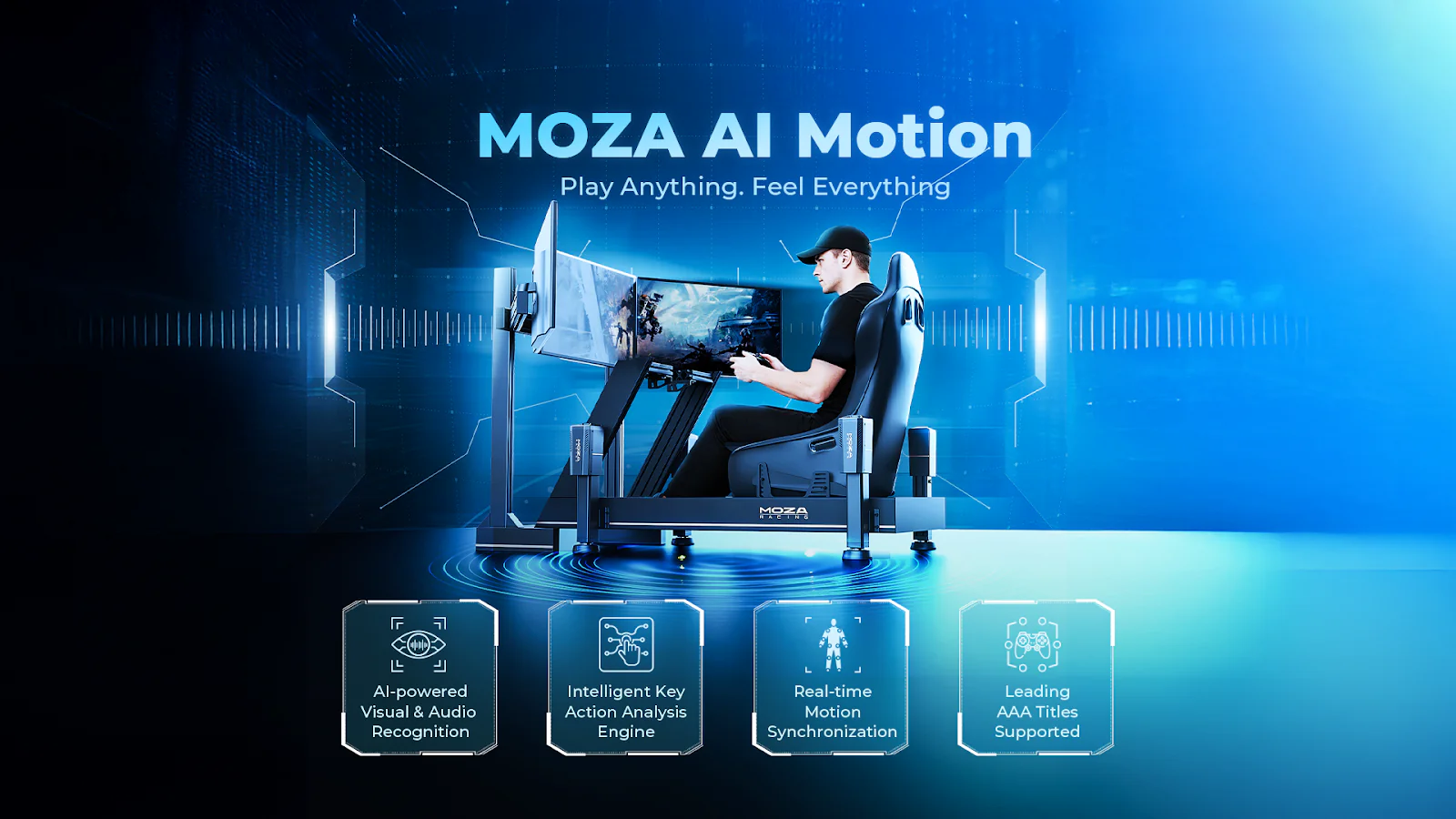
The GDC lineup is rounded off by the Motion Manager. This AI-supported software analyzes image and sound from games in real time that do not actually send any telemetry data, and translates them into movements of the actuators. The fact that you can now physically feel the rumbling of the road and hard impacts in titles such as Grand Theft Auto, Red Dead Redemption, or Cyberpunk 2077 is something we already know from D‑BOX or Motion Systems, and for the hardcore racer on iRacing it may only be a nice gimmick on the sidelines. But it turns the entire rig into an ultimate entertainment machine for all gaming genres, which once again enormously increases the practical value of the hardware.
Our conclusion after this presentation is crystal clear. MOZA is playing the perfect playbook here: they take elitist, often far too complicated hardcore technology out of the niche, package it into an unbelievably clean, functional ecosystem without cable clutter, and make it accessible to everyone through an expected highly competitive price. It is exactly this democratization of high-end equipment that excites us so much at SimUltimate. We are already preparing everything in our showroom to test whether MOZA’s declaration of war works just as well on the track as it does on paper. The release is planned for Q3 2026 – more information will follow.