MOZA Racing steps up its game. With the R21 Ultra, the Chinese manufacturer is launching a revised and significantly enhanced version of its R21 – once again entering a market segment where mistakes are now rarely forgiven. The demands placed on modern wheel bases have increased massively in recent years: raw power alone is no longer enough; sensitivity, consistency, and a coherent overall package are what's needed. This is exactly where MOZA wants to strike with the R21 Ultra.
At first glance, the price tag makes you pause. MOZA positions the base extremely aggressively. For € 799, you get a hefty 21 Newtonmeters of torque. That’s a statement, considering that competitors like Simagic, Asetek, or VRS often offer bases in the 12 to 15 Newtonmeter range for the same money. On paper, MOZA clearly wins the “Euro per Newtonmeter” comparison. But in sim racing, power alone hasn’t been everything for a long time.
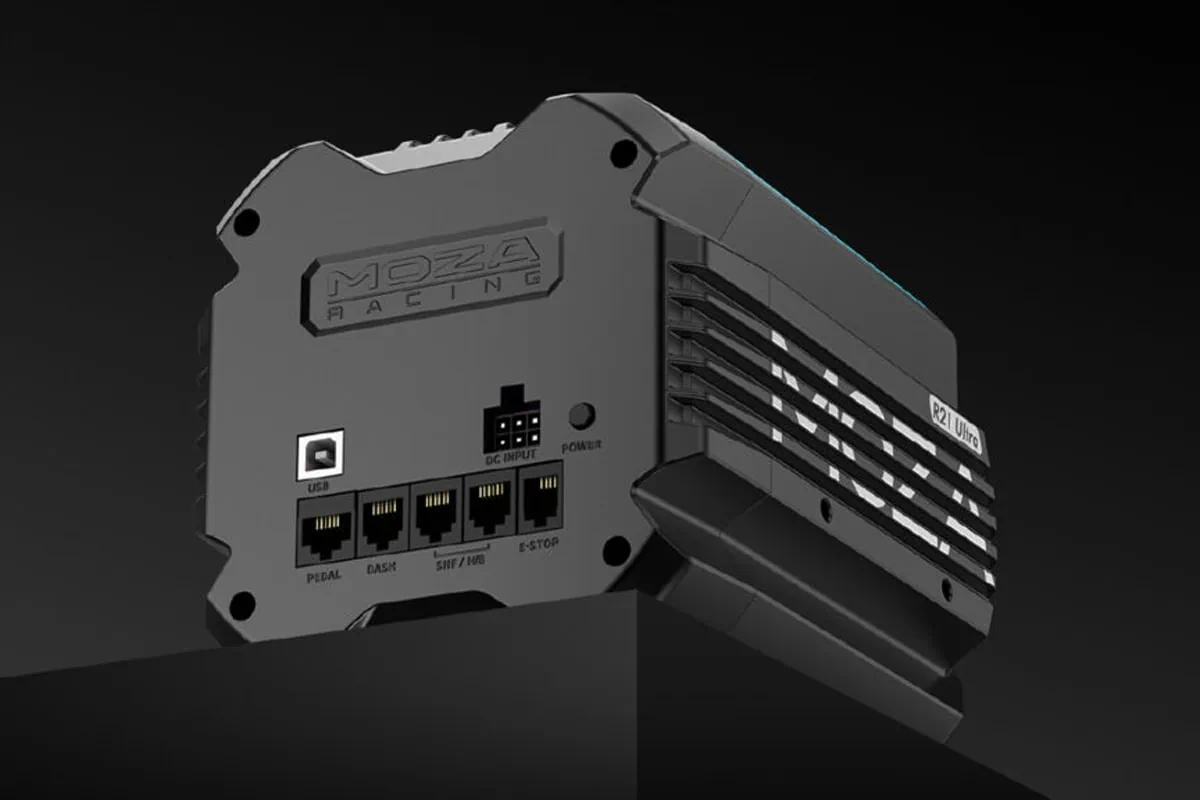
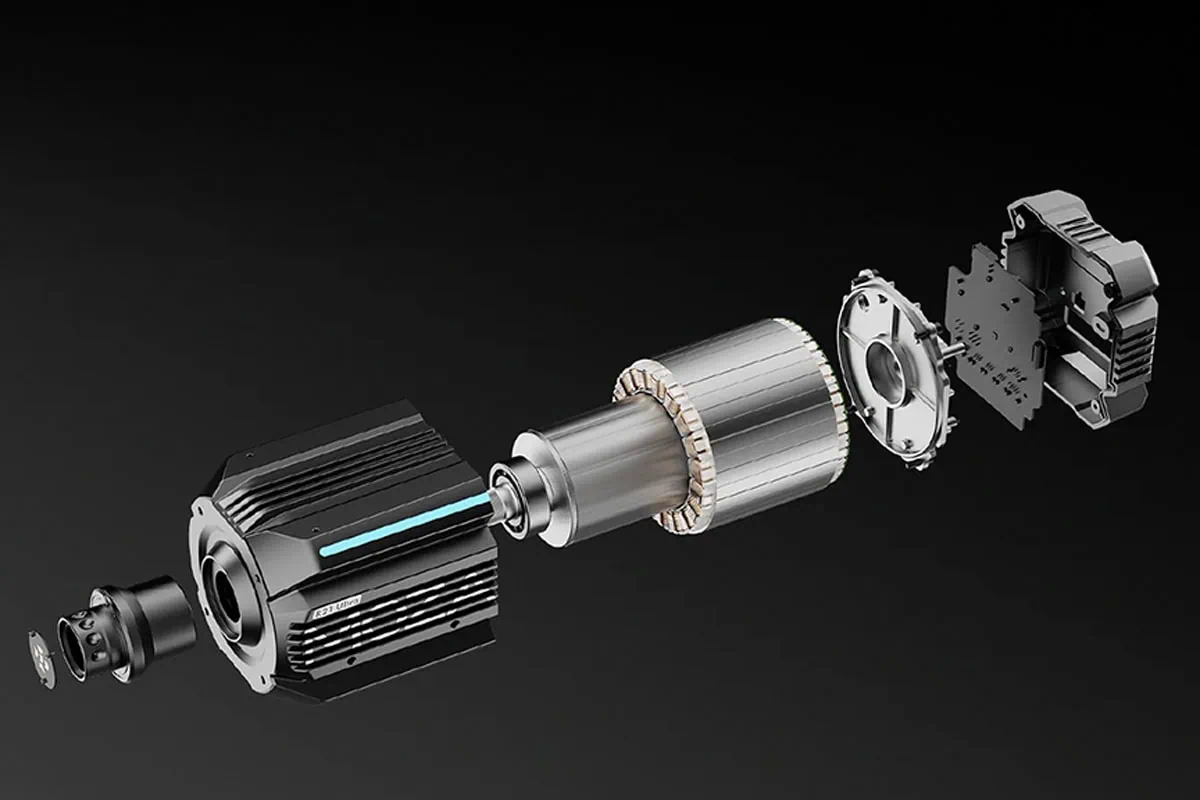
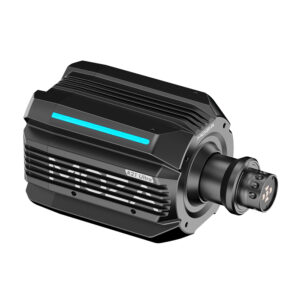
Visually, MOZA has done its homework. The bulky design of the previous generation (R16/R21) is history. The Ultra version looks more compact, more mature, and feels significantly more premium thanks to its CNC-machined aluminium housing, even if the plastic rear cover slightly undermines the premium impression. A huge plus is the new mounting flexibility: whether front-mount, side-mount, or the classic bottom-mount – the base fits on almost any rig without adapter stress. However, right when unboxing, one safety issue stands out: with a 21 Nm monster that can easily break a hand, an emergency stop button really belongs in the box. With MOZA, you have to buy and connect it separately – that’s saving money in the wrong place.
Closed ecosystem instead of high-end freedom
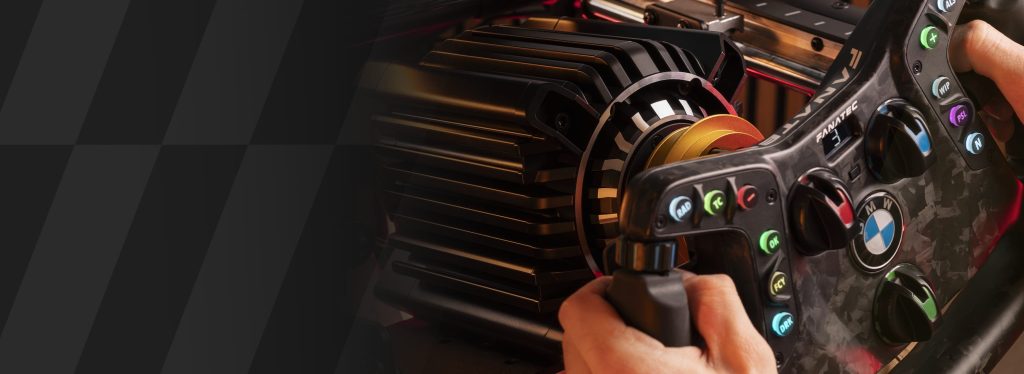
Technically, the biggest weakness of the R21 Ultra is the missing USB passthrough. And that’s where the base ends up in a tricky spot. Anyone buying a wheelbase in this performance class often wants to use absolute high-end third-party wheels from brands like Cube Controls or Ascher Racing. But since the MOZA base does not have a USB port that passes signals through the quick release to the PC, you’re forced to run a separate coiled cable from the wheel to the PC. At this price level, that feels outdated, and competitors like Simagic or Asetek handle this better. In other words, you are effectively pushed to stay within the MOZA ecosystem if you want to drive wirelessly – and MOZA’s wheels are good, but they still aren’t quite on the absolute “high-end” level that the base itself delivers.

Once you get on track, the R21 Ultra shows its teeth – in a positive way. The driving feel has made a huge leap forward. Anyone familiar with older MOZA bases may remember a slightly “robotic” or grainy feel in the force feedback, which often had to be smoothed out with heavy software filtering. That’s gone. The new motor with “Zero-Cogging” technology and the high-resolution encoder deliver an extremely smooth yet still highly detailed feedback. You feel road textures and curbs more clearly, without having to artificially soften the signals in software. The base remains consistent across different simulations, whether in ACC, iRacing, or Le Mans Ultimate.
There is, however, one drawback tied to the motor’s sheer size: inertia. Many sim racers buy powerful bases and then run them detuned to keep “headroom” in reserve. But in testing, it became clear that the R21 Ultra, when limited to around 12 Newtonmeters, feels noticeably more sluggish and less lively than a base built natively for 12 Newtonmeters, such as the MOZA R12. The heavy shaft of the large motor swallows fine detail at lower forces. In plain terms: if you don’t intend to actually use the brutal 15 to 21 Newtonmeters, you are effectively buying a worse driving feel with the R21 Ultra than you would get from a smaller, more agile base.

Pit House: finally software on eye level
The “Pit House” software now deserves praise. It has become clearer and, with the new force feedback equalizer, offers a powerful tool to boost specific frequencies – such as curb rumble – without making the wheel feel nervous. The new “Low Frequency Effects”, which simulate vibrations like shift jolts directly through the base, are a nice gimmick for added immersion, but they don’t replace a real seat-mounted bass shaker.
So what’s the conclusion? The MOZA R21 Ultra is an impressive piece of tech for its price. It offers brutal performance and, by now, a very refined driving feel for comparatively little money. However, it sits in a strange niche: it is essentially too strong for the average user (who would be happier with an R12) while at the same time lacking the open interfaces (USB passthrough) that true enthusiasts want for their custom wheels. But if you’re deeply invested in the MOZA ecosystem, don’t use third-party wheels, and simply want maximum power for your money, the R21 Ultra is currently unbeatable in terms of value.